
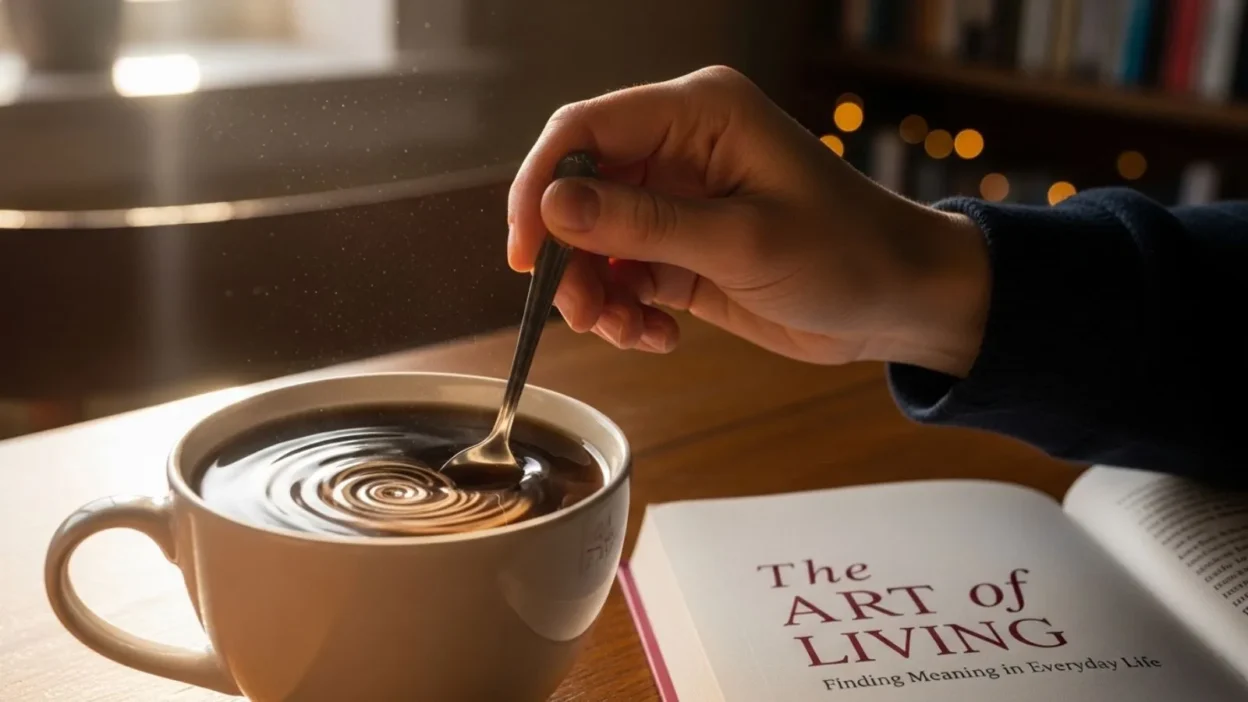
The term stirring is a versatile English word that carries both a literal and a figurative meaning, making it widely used in everyday conversations as well as in literature.
At its most basic level, stirring refers to the action of mixing or moving something around, such as stirring a cup of tea or a pot of soup.
However, beyond its physical sense, the word also holds a deeper emotional impact. It is often used to describe something that evokes strong feelings, such as a stirring speech, story, or piece of music.
Understanding the meaning of “stirring” is important for improving your vocabulary and communication skills.
If you are learning English or aiming to write more expressive content, this word can help you describe both actions and emotions effectively. In this guide, you will explore its definitions, uses, examples, and translations to gain a complete understanding.
🔶 What Does Stirring Mean?
The word “stirring” has multiple meanings depending on how it is used in a sentence. It can function both as a verb form and as an adjective, which makes it a flexible and commonly used word in English. Understanding these meanings will help you use the word more accurately in different contexts.
🔹 Basic Definition
In its simplest form, “stirring” is the present participle of the verb “stir.” It refers to the action of mixing, moving, or agitating something, usually in a circular motion. For example, when you stir tea with a spoon, you are blending the ingredients together. This is the literal meaning, which is mostly used in cooking or daily activities.
At the same time, “stirring” can also describe something that causes strong emotions or deep feelings. In this sense, it is used as an adjective. For instance, a “stirring speech” is one that inspires or excites people emotionally. This is known as the figurative meaning of the word.
🔹 Pronunciation
“Stirring” is pronounced as /ˈstɜːr.ɪŋ/, which sounds like STUR-ring. Practicing the correct pronunciation can improve both your speaking and listening skills.
🔹 Part of Speech
- Verb (present participle): Refers to an ongoing action (e.g., “She is stirring the soup.”)
- Adjective: Describes something emotionally powerful (e.g., “It was a stirring performance.”)
Overall, “stirring” is a powerful word that can express both physical actions and emotional experiences effectively.
🔶 Stirring as a Verb (Action Meaning)
When used as a verb, “stirring” refers to the physical action of mixing or moving something around, usually in a circular motion. It is the present participle form of the verb “stir” and is commonly used to describe actions that are happening right now or continuously. This meaning is very common in daily life, especially in cooking, cleaning, and other routine activities.
🔹 Literal Meaning
In its literal sense, “stirring” involves combining ingredients or shifting them to create a uniform mixture. For example, when you are making tea, coffee, or soup, you often need to stir the contents to blend flavors evenly. This action helps dissolve substances like sugar or spices, ensuring a smooth and consistent result. The focus here is purely on physical movement and mixing.
🔹 Examples in Daily Life
You will often hear stirring used in simple, everyday situations, such as:
- She is stirring her tea with a spoon.
- He is stirring the soup to prevent it from burning.
- The chef is stirring the sauce gently.
- I kept stirring the mixture until it became smooth.
These examples show how the word is used to describe ongoing actions in real time.
🔹 Related Verb Forms
The base verb “stir” can appear in different forms depending on tense:
- Stir (present): I stir my coffee every morning.
- Stirred (past): She stirred the soup well.
- Stirring (continuous): They are stirring the mixture.
Using “stirring” correctly helps you clearly describe actions in progress, making your communication more precise and natural.
🔶 Stirring as an Adjective (Descriptive Meaning)
When used as an adjective, “stirring” takes on a more emotional and expressive role. Instead of describing a physical action, it is used to describe something that strongly affects a person’s feelings. In this sense, “stirring” refers to anything that inspires, excites, or moves people deeply, often creating a lasting emotional impact.
🔹 Emotional Meaning
The emotional meaning of “stirring” is connected to experiences that awaken strong feelings such as motivation, passion, excitement, or even sadness. For example, a powerful speech that motivates people to take action can be described as “stirring.” Similarly, a touching story or a meaningful piece of music can also stir emotions in the audience.
🔹 Figurative Meaning
In figurative language, “stirring” is often used to enhance descriptions and make them more vivid. Writers, speakers, and content creators frequently use this word to add emotional depth to their message. It helps convey that something is not just good, but emotionally powerful and memorable.
🔹 Real-Life Examples
Here are some common examples of “stirring” used as an adjective:
- The leader gave a stirring speech that inspired the crowd.
- It was a stirring performance that brought tears to many eyes.
- The movie tells a stirring story of courage and hope.
- The music had a stirring effect on the audience.
In all these cases, “stirring” highlights the emotional strength and impact of the experience, making it a valuable word for expressive communication.
🔶 Emotional & Figurative Use of Stirring
Beyond its basic meanings, “stirring” is widely used in an emotional and figurative sense to describe experiences that deeply affect the human heart and mind. In this context, the word goes beyond simple description and helps express how something can influence thoughts, feelings, and actions in a powerful way.
🔹 Connection to Human Emotions
When something is described as “stirring,” it usually means it has the ability to awaken strong emotions. These emotions can vary depending on the situation—they might include inspiration, pride, excitement, empathy, or even sadness. For example, a national anthem played at an important event can be stirring because it fills people with pride and unity. Similarly, a heartfelt story can stir compassion and understanding.
🔹 Use in Literature and Media
In literature, films, and speeches, “stirring” is often used to emphasize the emotional depth of a moment. Writers and speakers choose this word to show that something is not ordinary—it leaves a strong impression on the audience. A stirring novel might explore themes of love, sacrifice, or courage, while a stirring film scene might stay in your memory long after you watch it.
🔹 Tone and Context Differences
The impact of “stirring” can change depending on the context. In most cases, it has a positive tone, suggesting something inspiring or uplifting. However, it can also describe deeply emotional or serious moments, such as a tragic event that moves people to tears.
🔶 Examples of Stirring in Sentences
To fully understand how “stirring” is used, it is helpful to look at it in real sentences. Since the word can function both as a verb and an adjective, its meaning changes depending on the context. Below are clear examples to help you see the difference.
🔹 Verb Examples (Action Use)
When used as a verb, “stirring” describes an ongoing physical action of mixing or moving something:
- She is stirring her coffee slowly.
- He is stirring the soup to keep it from burning.
- The chef is stirring the sauce carefully.
- I am stirring the mixture until it becomes smooth.
- They were stirring the ingredients together in a bowl.
In these sentences, “stirring” clearly shows an action that is happening in the present or continuously.
🔹 Adjective Examples (Emotional Use)
When used as an adjective, “stirring” describes something that creates strong feelings:
- The speaker gave a stirring speech that inspired everyone.
- It was a stirring story about courage and hope.
- The movie had a stirring ending that made people cry.
- Her performance was truly stirring and unforgettable.
- The music created a stirring atmosphere in the hall.
In these examples, “stirring” highlights the emotional impact rather than a physical action.
🔶 Synonyms of Stirring
Understanding synonyms of “stirring” helps expand your vocabulary and allows you to use the word more flexibly in different contexts. Depending on whether you are using “stirring” as a verb or adjective, the appropriate synonyms will vary.
🔹 Synonyms for Stirring as a Verb
When “stirring” refers to the physical action of mixing or moving something, common synonyms include:
- Mixing – combining ingredients together.
- Agitating – moving something vigorously.
- Whisking – beating or stirring quickly, often in cooking.
- Blending – combining two or more things evenly.
- Shaking – moving something to mix its contents.
Example sentence: She was whisking the batter while stirring the chocolate sauce.
🔹 Synonyms for Stirring as an Adjective
When “stirring” describes emotional or inspiring experiences, its synonyms highlight its impact on feelings:
- Moving – causing strong emotional reactions.
- Inspiring – motivating or uplifting people.
- Exciting – creating enthusiasm or interest.
- Thrilling – giving a sense of intense excitement.
- Touching – evoking feelings of compassion or tenderness.
Example sentence: The singer gave a moving and stirring performance that left the audience in awe.
🔹 Using Synonyms Correctly
Choosing the right synonym depends on context. For physical actions, words like mixing or blending are appropriate. For emotional impact, inspiring or moving works better. Understanding these subtle differences ensures that your language sounds natural, precise, and expressive.
Using synonyms not only makes your writing richer but also helps you communicate nuanced meanings effectively.
🔶 Antonyms of Stirring
Just as it is important to know the synonyms of “stirring”, understanding its antonyms can help you communicate opposite meanings and avoid confusion. The antonyms differ based on whether “stirring” is used as a verb or an adjective, and they help describe either inaction or lack of emotional impact.
🔹 Antonyms for Stirring as a Verb
When “stirring” refers to mixing or moving something, its opposite describes stillness or inactivity:
- Leaving – not moving or touching something.
- Settling – allowing contents to remain unmoved.
- Resting – staying in one place without motion.
- Idle – not taking action.
- Stationary – not moving or changing position.
Example sentence: The pot was left stationary, not stirring, so the ingredients began to stick.
🔹 Antonyms for Stirring as an Adjective
When “stirring” is used to describe something emotionally powerful or inspiring, its antonyms describe dullness or lack of impact:
- Boring – not interesting or engaging.
- Dull – lacking excitement or liveliness.
- Uninspiring – failing to motivate or stimulate feelings.
- Lifeless – lacking energy, emotion, or intensity.
- Mundane – ordinary and unremarkable.
Example sentence: The lecture was so uninspiring that it had the opposite effect of a stirring speech.
🔹 Using Antonyms Effectively
Using antonyms helps to contrast ideas clearly. For example, comparing a stirring performance with a dull presentation emphasizes the emotional impact of the first. Knowing both synonyms and antonyms gives you flexibility in writing and speaking, making your English more precise and expressive
🔶 Common Phrases Using Stirring
The word “stirring” is often used in common phrases and expressions to convey either action or emotion. Understanding these phrases can help you use the word naturally in conversation, writing, and literature.
🔹 Stirring Speech
A stirring speech is one that inspires or excites the audience emotionally. Politicians, leaders, and motivational speakers often deliver stirring speeches to motivate or uplift people.
- Example: The president gave a stirring speech that encouraged citizens to take action.
🔹 Stirring Story
A stirring story refers to a tale or narrative that evokes strong feelings. It can be inspiring, touching, or emotionally powerful.
- Example: Her autobiography is a stirring story of perseverance and courage.
🔹 Stirring Music
Stirring music describes compositions that move the listener emotionally, often inspiring or energizing them.
- Example: The orchestra performed a stirring piece of music that left the audience in awe.
🔹 Stirring Performance
A stirring performance is one that leaves a strong impression on viewers or listeners, whether in acting, singing, or other artistic displays.
- Example: The actor’s stirring performance won him critical acclaim.
🔹 Tips for Using Phrases
- Use “stirring” in front of nouns related to emotions or impact.
- Remember that it usually conveys a positive, inspiring, or powerful effect.
- For physical action, pair “stirring” with kitchen or mixing-related activities.
By learning these common phrases, you can express both literal and figurative meanings naturally. This makes your English sound more expressive, sophisticated, and precise, whether you are speaking or writing.
🔶 Difference Between Stirring, Moving, and Inspiring
Although “stirring,” “moving,” and “inspiring” are often used interchangeably, they have subtle differences in meaning and usage. Understanding these differences helps you choose the right word for the right context.
🔹 Stirring
Stirring emphasizes a strong emotional or motivational impact that is often immediate and intense. It can refer to anything that awakens strong feelings, such as a speech, story, performance, or music.
- Example: The general’s speech was stirring, filling the soldiers with courage.
🔹 Moving
Moving focuses on evoking deep emotions, often touching the heart or soul. While stirring is usually energetic and motivating, moving is more about emotional resonance, sometimes gentle or reflective.
- Example: The documentary was moving and made the audience cry.
🔹 Inspiring
Inspiring refers to something that motivates or encourages people to take action or achieve goals. It implies a sense of upliftment or personal growth, often with a positive influence on behavior or thinking.
- Example: Her journey from hardship to success was truly inspiring.
🔹 Key Differences
| Word | Emotional Tone | Effect | Example Use |
|---|---|---|---|
| Stirring | Intense, energetic | Excites or motivates | Stirring speech, stirring music |
| Moving | Gentle, heartfelt | Touches deeply | Moving story, moving scene |
| Inspiring | Positive, uplifting | Motivates or encourages action | Inspiring journey, inspiring leader |
In short, stirring combines both intensity and emotional impact, moving appeals to deep feelings, and inspiring encourages action. Choosing the correct word enhances your writing and speaking, making your communication clearer and more effective.
🔶 When and How to Use “Stirring” Correctly
Using the word “stirring” correctly requires understanding both its literal (action) and figurative (emotional) meanings. Applying it appropriately ensures your writing and speaking are accurate, expressive, and natural.
🔹 Using Stirring as a Verb
When “stirring” describes physical action, it refers to mixing, moving, or agitating something continuously. This use is common in cooking, science, or everyday tasks.
- Example: She is stirring the soup to prevent it from sticking.
- Tip: Use “stirring” in sentences with present continuous tense for ongoing actions.
🔹 Using Stirring as an Adjective
As an adjective, “stirring” describes something that provokes strong emotions or excitement. This use is common in literature, speeches, movies, or music.
- Example: The orchestra delivered a stirring performance that captivated the audience.
- Tip: Place “stirring” before nouns like speech, story, performance, or music to emphasize emotional impact.
🔹 Common Mistakes to Avoid
- Using stirring only for literal actions when describing emotional impact.
- ❌ The speech was stirring physically.
- ✅ The speech was stirring and inspired everyone.
- Confusing stirring with dull or neutral descriptions.
- ❌ It was a stirring story, but I felt nothing.
- ✅ It was a stirring story that moved everyone deeply.
🔹 Practical Tips
- Think about context first: Is it action or emotion?
- For physical mixing, verbs like stir, blend, whisk work well.
- For emotional impact, consider stirring, moving, inspiring depending on intensity.
- Combine with examples to make the meaning clear.
Using “stirring” correctly helps you convey precise meaning, whether describing a simple action or a powerful emotional experience, enhancing both your English skills and communication style.
🔶 FAQs About Stirring Meaning
1. What does stirring mean in simple words?
Answer: Stirring can mean mixing or moving something (literal) or causing strong emotions (figurative). For example, stirring tea is physical, while a stirring speech moves people emotionally.
2. Is stirring a positive or negative word?
Answer: Usually, stirring has a positive meaning, especially when describing emotions or inspiration. However, in rare cases, it could refer to negative emotions if context suggests unrest or agitation.
3. Can stirring describe emotions?
Answer: Yes. When used as an adjective, stirring describes anything that evokes strong feelings, such as a story, performance, music, or speech.
4. What is a stirring speech?
Answer: A stirring speech is one that excites, motivates, or inspires the audience emotionally. It leaves a lasting impression and can encourage action or reflection.
5. What is stirring in cooking?
Answer: In cooking, stirring refers to the action of mixing ingredients continuously to combine them properly or prevent sticking and burning.
6. What are some synonyms of stirring?
Answer: Depending on context, synonyms include:
- For emotions: moving, inspiring, exciting, touching, thrilling
- For actions: mixing, blending, whisking, agitating
7. Can stirring be used in literature?
Answer: Absolutely. Writers use stirring to describe powerful scenes, emotional narratives, or impactful moments, giving depth and intensity to the story.
🔶 Conclusion
The word “stirring” is a versatile and expressive term in English, carrying both literal and figurative meanings.
As a verb, it describes the physical action of mixing or moving something, commonly seen in cooking or daily activities.
As an adjective, it captures experiences that evoke strong emotions, such as inspiring speeches, moving stories, or powerful performances.
Understanding the context is key to using “stirring” correctly. Pairing it with the right nouns or actions ensures that your sentences are clear, accurate, and impact.
Knowing its synonyms and antonyms further enhances your ability to communicate nuanced meanings, while examples and phrases make it easier to apply in real life.

Oliver Wordsmith is the creative mind behind Punnery.com, a website full of clever puns, witty wordplay, and visual jokes. At Punnery.com, Oliver shares content that makes readers laugh, sparks creativity, and celebrates the playful side of language.