
In the fast-paced world of business, understanding the RFQ meaning in business is essential for companies, suppliers, and entrepreneurs alike.
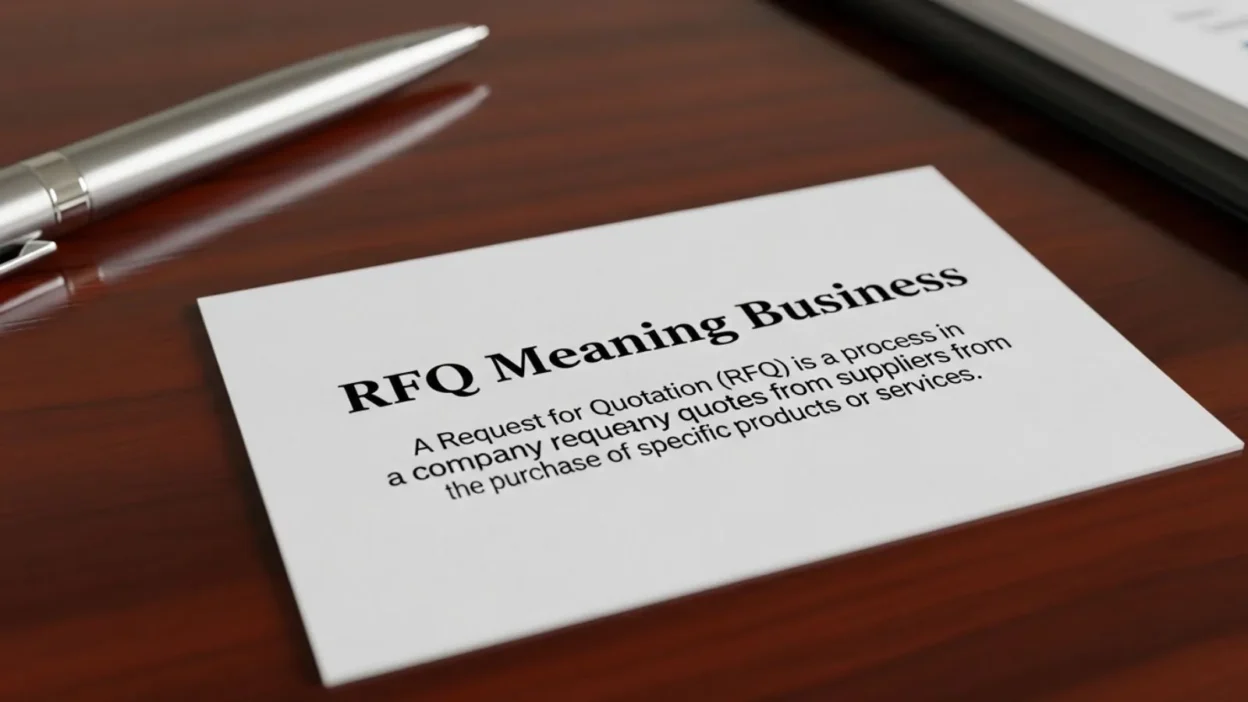
An RFQ, or Request for Quotation, is a formal document that businesses use to request pricing, terms, and details from potential vendors for specific products or services.
If you are a small business owner trying to source materials efficiently or a procurement professional managing multiple suppliers, knowing how to use RFQs can save both time and money.
RFQs allow businesses to compare offers transparently, make informed purchasing decisions, and maintain strong relationships with reliable suppliers.
In today’s competitive market, mastering the RFQ process is not just about obtaining quotes—it’s about streamlining operations, ensuring quality, and negotiating better deals. In this article, we’ll dive deep into what an RFQ is, why it matters, and how to create one that drives real business results.
What Does RFQ Stand For?
The term RFQ stands for Request for Quotation, a key concept in the business and procurement world. At its core, an RFQ is a formal invitation sent by a company to suppliers, asking for detailed pricing and terms for specific products or services. Unlike casual price inquiries, an RFQ is structured, professional, and often includes exact specifications, quantities, and deadlines.
Understanding the RFQ meaning in business also involves distinguishing it from related procurement documents: RFP (Request for Proposal) and RFI (Request for Information). While an RFI is used to gather general information about vendors or products, and an RFP seeks detailed proposals for projects or solutions, an RFQ focuses primarily on pricing and terms for clearly defined goods or services.
Businesses rely on RFQs to make informed purchasing decisions efficiently. For example, a manufacturing company needing 1,000 units of a specific component may send an RFQ to multiple suppliers, ensuring they get the most competitive price while meeting quality standards.
RFQs are also essential for suppliers, providing a clear framework to submit accurate quotes and increasing their chances of winning contracts. Whether you’re a business owner, procurement professional, or vendor, knowing how to interpret and respond to an RFQ is vital. In the following sections, we’ll explore the importance of RFQs in business, the step-by-step process, and tips for writing effective requests that get results.
Importance of RFQs in Business
In today’s competitive business environment, understanding the RFQ meaning in business is more than just terminology—it is a critical tool for operational efficiency and cost management. An RFQ helps companies streamline their purchasing process by providing a clear and structured way to gather pricing and terms from multiple suppliers. This ensures that businesses can make informed decisions, compare offers objectively, and select the most suitable vendor for their needs.
One of the main advantages of using an RFQ is cost control. By receiving multiple quotations for the same product or service, companies can identify competitive pricing and negotiate better deals. RFQs also reduce the risk of misunderstandings or hidden costs since suppliers must clearly outline their terms, delivery timelines, and conditions.
Beyond pricing, RFQs play a crucial role in maintaining transparency and fairness in procurement. By sending the same request to multiple vendors, businesses ensure an equal opportunity for all suppliers, fostering healthy competition and stronger business relationships.
RFQs are not only beneficial for the buyer—they also provide value to suppliers. Vendors can respond to requests with clear, accurate quotations, potentially gaining long-term contracts and enhancing credibility.
In industries such as manufacturing, IT, and retail, RFQs are often the first step in building successful supplier partnerships. Whether you are managing a small business or a large enterprise, mastering the RFQ process can save time, reduce costs, and improve overall business efficiency, making it an indispensable component of modern procurement strategies.
The RFQ Process: Step-by-Step
Step 1: Identify the Need
The process begins with recognizing the requirement for a product or service. Businesses must define what they need, including quantity, specifications, and quality standards, before reaching out to suppliers.
Step 2: Prepare the RFQ Document
A clear and detailed RFQ includes product or service descriptions, quantities, technical specifications, delivery timelines, payment terms, and any other conditions. Well-prepared RFQs reduce confusion and increase the likelihood of accurate supplier quotes.
Step 3: Distribute the RFQ to Vendors
The RFQ is sent to selected suppliers who are capable of fulfilling the request. Sending the RFQ to multiple vendors encourages competitive pricing and ensures transparency.
Step 4: Receive and Evaluate Quotations
Once suppliers respond, the business evaluates the quotations based on price, delivery time, quality, and compliance with requirements. Using a scoring system or checklist can make comparisons easier and more objective.
Step 5: Select a Supplier and Issue Purchase Order
After careful evaluation, the company chooses the vendor that offers the best combination of price, quality, and reliability. A formal purchase order is then issued to finalize the agreement.
How to Write an Effective RFQ
1. Be Clear and Specific:
Begin by clearly describing the products or services you need. Include exact specifications, quantities, quality standards, and any technical details. The more precise your RFQ, the more accurate the supplier’s quotation will be.
2. Include Submission Guidelines:
Specify the deadline for quotation submission, preferred format (email, portal, or document), and contact information for queries. This ensures all vendors respond in a consistent and timely manner.
3. Define Terms and Conditions:
Include essential business terms such as payment options, delivery schedules, warranty requirements, and penalties for delays. This prevents confusion and ensures suppliers understand your expectations upfront.
4. Set Evaluation Criteria:
Clearly state how quotations will be evaluated, whether based on price, delivery time, quality, or a combination of factors. Transparent criteria help suppliers tailor their responses and make the evaluation process easier.
5. Provide a Professional Template:
Using a structured RFQ template creates consistency and reduces errors. Include sections for supplier details, pricing breakdown, terms acceptance, and signature.
Common Mistakes in RFQs
1. Vague Specifications:
One of the most frequent mistakes is providing unclear or incomplete product or service descriptions. Without precise details, suppliers may submit inaccurate quotes, leading to misunderstandings or mismatched orders.
2. Limited Supplier Outreach:
Sending an RFQ to only one or two vendors reduces competition and can result in higher prices. It is essential to reach multiple qualified suppliers to get the best combination of cost, quality, and delivery.
3. Ignoring Deadlines:
Not clearly stating submission deadlines or failing to follow up on late responses can delay the procurement process and affect project timelines.
4. Omitting Evaluation Criteria:
If a business does not define how quotations will be evaluated, it may struggle to compare offers objectively, creating confusion and potential disputes.
5. Overcomplicating the RFQ:
Including unnecessary details or complex formats can overwhelm suppliers and discourage responses. A simple, well-structured RFQ is far more effective.
RFQ in Digital Business
In the modern business landscape, the traditional RFQ process is increasingly moving online, making procurement faster, more accurate, and highly efficient. Digital RFQs leverage software tools, platforms, and automation to streamline communication between businesses and suppliers, reducing manual errors and improving overall efficiency.
Digital RFQ platforms allow companies to create, send, and track multiple requests simultaneously. Suppliers can respond in real-time, submit detailed quotations, and even ask clarifying questions directly through the system. This reduces the need for back-and-forth emails and ensures that all communication is organized in one place.
One of the major benefits of digital RFQs is centralized record-keeping. Every request, response, and document is stored digitally, making it easy for procurement teams to review past quotes, track supplier performance, and generate reports for decision-making. Automation also helps enforce deadlines, ensuring suppliers respond on time and that the evaluation process stays on schedule.
Popular digital tools also offer analytics features, such as comparing quotes instantly, ranking suppliers, and identifying cost-saving opportunities. This not only speeds up decision-making but also increases transparency and accountability in the procurement process.
In 2026, businesses of all sizes—from startups to large enterprises—are embracing digital RFQs to stay competitive. By integrating RFQs into digital workflows, companies can save time, reduce costs, improve supplier relationships, and focus on strategic growth rather than manual procurement tasks. The digital approach transforms the RFQ from a simple quotation request into a powerful tool for business efficiency and decision-making.
Real World Examples of RFQs
Understanding the RFQ meaning in business becomes clearer when we look at real-world applications across various industries. RFQs are widely used by companies to ensure competitive pricing, maintain quality, and streamline supplier selection.
For example, a manufacturing company needing thousands of custom components may send an RFQ to several suppliers. Each supplier provides a detailed quotation including price, delivery timeline, and compliance with specifications. By comparing these responses, the company can select the vendor offering the best combination of cost, quality, and reliability.
In the IT industry, businesses often use RFQs when sourcing hardware or software services. A company upgrading its servers might request quotes from multiple vendors to ensure they receive the best pricing and service packages. This also allows the company to evaluate warranty terms, support options, and delivery schedules before making a commitment.
Even retail businesses rely on RFQs when sourcing products for stores. Sending structured RFQs to different suppliers helps them compare prices, shipping costs, and return policies efficiently, ensuring that their stores remain stocked without overspending.
Smaller businesses can also benefit from RFQs. A local café, for instance, may request quotes for coffee beans or bakery supplies from multiple distributors. Even for small orders, this approach ensures they receive fair pricing and high-quality products.
These examples show that regardless of industry or business size, the RFQ process enables companies to make informed purchasing decisions, save money, and maintain strong relationships with trusted suppliers. RFQs are not just documents—they are essential tools for strategic and cost-effective procurement.
FAQs About RFQ Meaning in Business
1. What is the difference between an RFQ and a purchase order?
An RFQ is a request for pricing and terms from suppliers, whereas a purchase order is a formal document issued to a selected supplier to confirm the purchase. In short, an RFQ comes first, and the purchase order finalizes the transaction.
2. Can RFQs be used for services as well as products?
Yes. While RFQs are commonly used for tangible goods, they are also effective for sourcing services with defined deliverables, timelines, and specifications.
3. How long does the RFQ process usually take?
The timeline varies depending on the complexity of the request and the number of suppliers involved. Simple RFQs may take a few days, while complex requests for large orders can take several weeks.
4. How should a supplier respond to an RFQ?
Suppliers should provide a detailed quotation that matches the specifications, includes pricing, delivery terms, payment conditions, and any other requirements stated in the RFQ. Timely and accurate responses improve the chances of winning the contract.
5. What happens if no supplier meets the requirements?
If no quote meets the business’s needs, the company may revise the RFQ, negotiate with suppliers, or consider alternative products or services.
Conclusion
Understanding the RFQ meaning in business is essential for anyone involved in procurement, whether you are a business owner, supplier, or procurement professional.
An RFQ, or Request for Quotation, provides a structured way to gather accurate pricing, compare offers, and make informed purchasing decisions.
From preparing clear specifications to evaluating quotations and selecting the right supplier, mastering the RFQ process ensures efficiency, transparency, and cost savings.
In today’s digital age, leveraging online RFQ tools further streamlines procurement, allowing businesses to manage multiple requests, track responses, and analyze supplier performance effortlessly.
By avoiding common mistakes and following best practices, companies can strengthen supplier relationships, maintain competitive pricing, and enhance overall operational effectiveness.