
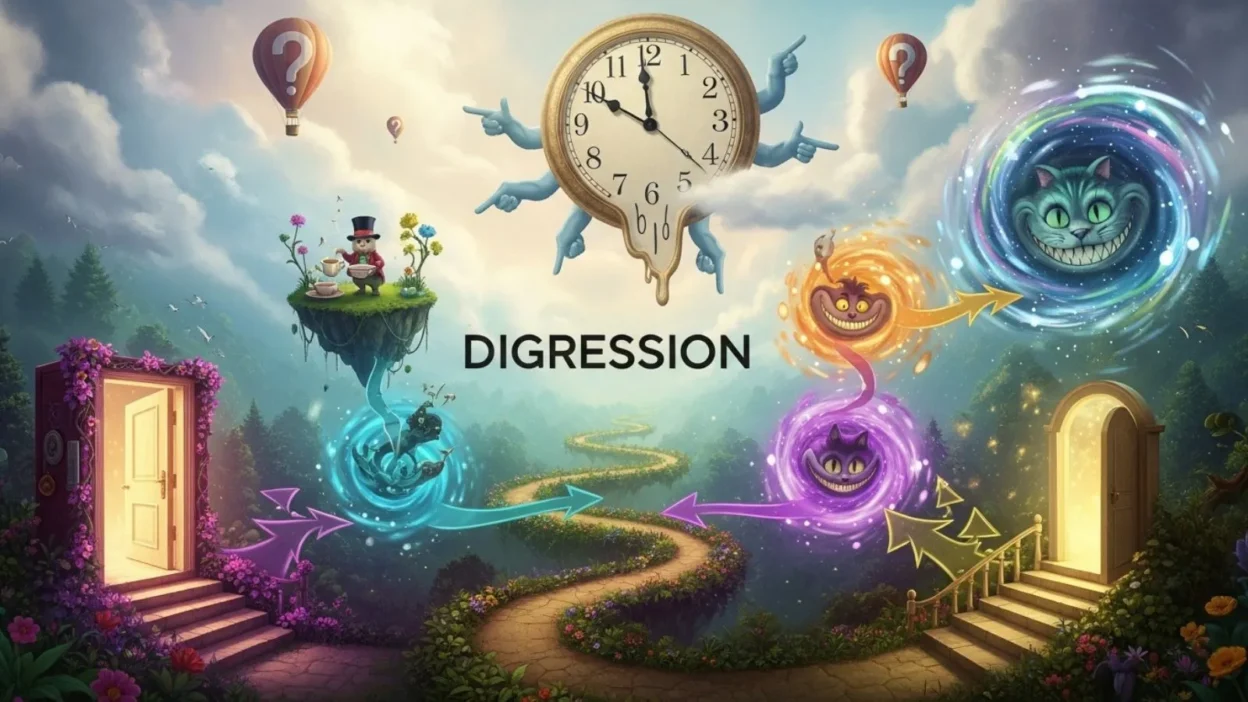
I still remember a conversation where I was trying to explain something important, but halfway through, I suddenly started talking about a completely different topic.
By the time I finished, my listener looked confused and honestly, I realized I had just gone off track. That’s exactly where the concept of digression meaning comes in.
If you’ve ever found yourself drifting away from the main point while speaking or writing, you’ve experienced digression without even noticing it. Understanding the digression meaning is especially helpful for students, writers, and anyone who wants to communicate clearly.
In simple terms, it refers to moving away from the main topic to discuss something unrelated or less important.
While it can sometimes make conversations more interesting, it can also confuse your audience if overused. In this guide, you’ll learn everything about digression in the easiest way possible.
🔵 What is Digression? (Clear & Simple Definition)
Understanding the digression meaning starts with breaking it down into the simplest possible terms. Digression refers to a moment when someone temporarily moves away from the main topic while speaking or writing. Instead of sticking to the central idea, the person shifts to something less relevant or completely unrelated before eventually returning to the original point.
In simple words, digression means “going off-topic.” It often happens naturally in conversations because our thoughts are connected in unexpected ways.
For example,
You might start talking about your studies and suddenly begin discussing a movie you watched last night—that shift is a digression.
From a more formal perspective, the digression definition is a departure from the main subject in speech or writing. It is commonly used in storytelling, casual conversations, and even speeches. However, its effectiveness depends on how and when it is used.
Pronunciation of digression is: daɪˈɡrɛʃ.ən (die-GRESH-un). The word comes from the Latin term “digressio,” which means “a stepping aside” or “departure.”
While digression can sometimes add depth, humor, or personal touch to communication, it can also distract the audience if it becomes too frequent. That’s why understanding the digression meaning in writing is important—it helps you decide when to stay focused and when a slight detour can actually improve your message.
🔵 Understanding Digression with Real Life Examples
To fully grasp the digression meaning, it helps to look at how it appears in everyday situations. In real life, digression is very common because human conversations rarely stay perfectly focused.
🔹 Digression in Daily Conversation
Imagine you’re telling a friend about your exam, and suddenly you start talking about your teacher’s funny habits. That shift away from the main topic is a perfect example of digression. It happens naturally when one thought triggers another.
Example:
“I was preparing for my math exam yesterday—oh, by the way, my teacher always tells the same joke before tests—it’s so repetitive! Anyway, the exam was quite difficult.”
Here, the sentence about the teacher is a digression.
🔹 Digression in Writing
In writing, digression occurs when the writer includes information that is not directly related to the main point. This is often seen in blogs, stories, or informal articles.
An article about healthy eating suddenly includes a paragraph about the writer’s vacation. That unrelated detail is a digression.
🔹 Digression in Speeches or Storytelling
Speakers and storytellers sometimes use digression intentionally to make their content more engaging. A short, relevant digression can add humor or emotional connection.
🔵 Why Do People Use Digression?
To truly understand the digression meaning, it’s important to know why people naturally drift away from the main topic. Digression isn’t always intentional—in fact, it often happens without us even realizing it.
🔹 Psychological Reasons
Our brains don’t think in straight lines. Instead, thoughts are connected like a web. One idea quickly leads to another, which can pull us away from the original topic. For example, talking about school might remind you of a friend, which then leads to a completely different story. This mental connection is one of the main reasons digression occurs.
Another reason is memory triggers. Certain words, emotions, or situations can suddenly remind us of past experiences, causing us to shift focus.
🔹 Communication Style
Some people naturally use a storytelling style when they speak or write. They add extra details, side stories, or background information to make their message more interesting. This often includes digressions.
In conversations, digression can also happen when someone is trying to explain something in more detail but ends up adding unnecessary information. While their intention is to clarify, it can sometimes lead to confusion.
🔵 Is Digression Good or Bad?
When learning the digression meaning, one common question people ask is whether digression is a good or bad thing. The answer is simple: it depends on how you use it.
🔹 When Digression is Useful
Digression can actually improve your communication when used correctly. In storytelling or casual conversations, a small digression can make your message more engaging and relatable. It allows you to add humor, personal experiences, or interesting details that capture attention.
For example, a writer might briefly share a personal story in the middle of an article to connect with readers. This type of digression makes the content feel more human and less robotic. In speeches, speakers often use short digressions to keep the audience interested and emotionally connected.
🔹 When Digression Becomes a Problem
However, too much digression can create confusion. If you move too far away from the main topic, your audience may lose track of what you were originally trying to say. This is especially problematic in academic writing, professional communication, or SEO content, where clarity and focus are very important.
Unnecessary digressions can also make your writing look unorganized and harder to understand. Readers may feel frustrated if they have to work hard to find the main point.
Understanding the digression meaning in writing helps you strike the right balance. A small, relevant digression can enhance your message, but overusing it can weaken your overall communication.
🔵 Digression in Writing (Detailed Guide)
Understanding the digression meaning in writing is essential if you want to create clear, engaging, and effective content. While digression can sometimes improve your writing, it must be used carefully depending on the context.
🔹 Role of Digression in Creative Writing
In creative writing—such as novels, stories, and personal blogs—digression can be a powerful tool. Writers often include side stories, background details, or character insights that are not directly related to the main plot but still add depth and emotion. These digressions can make the story richer and more enjoyable for readers when they are relevant and well-placed.
🔹 Digression in Academic Writing
In academic or formal writing, digression is generally discouraged. The goal of this type of writing is to stay focused, clear, and direct. Adding unrelated information can weaken your argument and confuse the reader. That’s why students are usually advised to avoid unnecessary digressions in essays, reports, and research papers.
🔹 Digression in Content Writing & SEO
In blog posts and online content, digression should be used carefully. A small, meaningful digression can make your content more engaging and human-friendly. However, too much digression can hurt readability and even affect SEO performance, as search engines prefer clear and focused content.
🔵 Digression vs Similar Terms
When exploring the digression meaning, it’s important to distinguish it from similar words that are often confused with it. Understanding these differences will help you communicate more clearly and use the word correctly.
🔹 Digression vs Tangent
Both digression and tangent involve moving away from the main topic, but there’s a subtle difference. A digression is usually a temporary departure to add extra information or a side story, after which the speaker or writer returns to the main topic. A tangent, on the other hand, often feels more abrupt and may not always return to the original topic.
Example:
- Digression: “I was talking about my vacation, and by the way, my cousin’s wedding was amazing—oh, back to my travel story…”
- Tangent: “I was talking about my vacation… did you hear about the latest celebrity scandal?” (doesn’t link back)
🔹 Digression vs Distraction
A distraction pulls attention away unintentionally and usually prevents the main message from being delivered. Digression can be intentional or at least controlled.
Example:
- Distraction: Checking your phone while explaining something.
- Digression: Sharing a short personal story in the middle of an article.
🔹 Digression vs Deviation
A deviation is a more formal term that refers to moving away from a set standard, path, or plan. Digression is conversational and often appears in speech or writing.
Knowing these differences ensures you use digression meaning accurately and helps avoid confusion with similar terms. Proper usage allows you to keep your content engaging without losing clarity.
🔵 Synonyms and Antonyms of Digression
To fully understand the digression meaning, it’s helpful to explore its synonyms and antonyms. This not only expands your vocabulary but also helps you use the word more accurately in different contexts.
🔹 Common Synonyms of Digression
- Tangent – A slight departure from the main topic, often temporary.
- Deviation – Moving away from a standard path or topic.
- Aside – A brief comment or story that interrupts the main narrative.
- Divergence – A shift from the main idea, often more noticeable.
- Detour – An informal term for temporarily moving away from the main point.
These synonyms can often be used interchangeably with digression, depending on the tone and context. For example, in storytelling, “aside” or “tangent” may feel more natural, whereas “deviation” is better suited for formal writing.
🔹 Common Antonyms of Digression
- Focus – Staying on the main point without wandering.
- Relevance – Ensuring all information directly supports the topic.
- Directness – Clear, straightforward communication without side stories.
- Concentration – Maintaining attention on the primary subject.
Using antonyms helps emphasize clarity in writing or speaking. For instance, in academic essays or professional content, avoiding digression and maintaining focus is crucial for effective communication.
🔵 How to Use Digression in a Sentence
Once you understand the digression meaning, the next step is learning how to use it naturally in your writing and speaking. Digression can be a useful tool when used intentionally, but it’s important to apply it correctly.
🔹 Simple Sentences
For beginners, start by using digression in small, clear sentences. A simple digression adds a side note or extra detail without confusing the reader.
Example:
- “I was explaining my trip to Paris—oh, and I must tell you about the amazing bakery I found there—before I forget, the museum visit was incredible too.”
Here, the middle part about the bakery is a digression: it’s related to the trip but temporarily shifts focus.
🔹 Advanced Sentences
In more advanced writing or speaking, digression can be layered with multiple ideas or emotions to enrich the narrative.
Example:
- “While discussing my plans for the new project, I remembered last year’s challenges with the team, the unexpected delays caused by the weather, and how our office renovation created a lot of confusion—yet all of these experiences taught me valuable lessons before returning to the main project idea.”
This shows how digression can add depth and context while keeping the main topic in focus.
🔹 Formal vs Informal Usage
- Informal: Digression can be playful or personal, like in stories or blogs.
- Formal: In essays or professional writing, digression should be minimal and purposeful.
By practicing these examples, you’ll learn when a digression enhances your content and when it might distract your audience. Mastering the digression meaning in sentences ensures your writing is both engaging and clear.
🔵 Common Mistakes Related to Digression
Even after understanding the digression meaning, many people make mistakes when using it in writing or speaking. Recognizing these common errors can help you communicate more clearly and avoid confusing your audience.
🔹 Overusing Digression
One of the biggest mistakes is overusing digression. While a small, well-placed digression can add interest, too many side notes can overwhelm the main message. Readers or listeners may struggle to follow your point, and your content may appear unorganized.
Example of overuse:
- “I was talking about my new book, and then I remembered my friend’s birthday, the movie we watched last week, the café we visited, and the weekend plans we made—but about the book…”
Here, the main topic gets lost in too many unrelated details.
🔹 Confusing Digression with Storytelling
Another common mistake is confusing digression with storytelling. While stories can include digression for effect, every detail should still connect to the main point. Adding completely unrelated information breaks the flow.
🔹 Using Digression in Formal Writing
Many writers mistakenly include digressions in academic essays, reports, or business documents. In formal contexts, digression can make your writing seem careless or unprofessional. Staying focused is crucial.
🔹 Ignoring Audience Expectations
Finally, failing to consider your audience is a mistake. Casual digressions may work in blogs or speeches but can frustrate readers in technical, academic, or professional content.
🔵 How to Avoid Unnecessary Digression (Practical Tips)
Knowing the digression meaning is only half the battle; the real skill lies in controlling it. Avoiding unnecessary digression helps keep your writing and speech clear, focused, and effective. Here are practical tips to help you stay on track.
🔹 Stay Focused on the Main Idea
Before you start writing or speaking, clearly define your main topic or goal. Ask yourself: “What am I trying to communicate?” Every sentence should contribute to that central idea. If it doesn’t, consider removing or revising it.
🔹 Use Outlines
Creating an outline is one of the simplest ways to prevent digression. Break your content into main points and subpoints, and stick to this structure while writing or speaking. An outline acts as a roadmap, helping you avoid irrelevant tangents.
🔹 Edit and Review
During the editing phase, look for sentences or paragraphs that stray from your main topic. Ask yourself whether each section adds value. If it doesn’t, cut it or move it to a more relevant section.
🔹 Ask: “Does This Support My Topic?”
Whenever you feel the urge to add extra information, pause and evaluate. If the detail doesn’t directly support your main idea, it’s likely a digression. Only include digressions that enhance clarity, engagement, or storytelling.
🔹 Practice Mindful Speaking
In conversations or presentations, be aware of your thoughts. Notice when your mind drifts and gently steer back to the main point. Pausing before adding side details can prevent unintentional digression.
🔵 Examples of Digression in Literature and Media
Understanding the digression meaning becomes clearer when we see how writers and speakers use it in literature, films, and media. Digression can be an effective tool to add depth, humor, or insight when used thoughtfully.
🔹 Digression in Literature
Many famous authors use digression to enrich their stories. For example, in novels, a writer might pause the main plot to provide background about a character’s past or share an interesting side story. This digression helps readers understand motivations, emotions, or context. Classic authors like Charles Dickens often included digressions in their works, adding detailed descriptions of society, characters, or events that were not strictly part of the main plot.
Example:
In David Copperfield, Dickens frequently digresses to describe London life, minor characters, or personal anecdotes, which adds depth and richness to the story.
🔹 Digression in Media and Film
In movies or TV shows, digression can appear as subplots or comedic side scenes. These moments may seem unrelated to the main storyline but often enhance character development or audience engagement. For example, in sitcoms like Friends, a character’s small side adventure often creates humor and builds relatability without changing the main plot.
🔹 Why These Digressions Work
Successful digressions in media or literature are intentional, controlled, and relevant to the audience. They don’t distract but instead provide additional interest, context, or entertainment. Unplanned or excessive digressions, however, can confuse or bore the audience.
🔵 FAQs About Digression Meaning
When learning the digression meaning, readers often have several common questions. Addressing these FAQs helps clarify how digression works in writing, speaking, and everyday life.
🔹 What does digression mean in simple words?
Digression means temporarily moving away from the main topic to discuss something less relevant. It can be a short story, example, or side note added to make communication more interesting.
🔹 Is digression always bad?
No, digression is not always bad. A brief, intentional digression can add humor, context, or engagement, especially in storytelling or casual conversation. However, excessive or irrelevant digressions can confuse readers or listeners.
🔹 Why do people digress while speaking?
People digress naturally because thoughts are often connected in unexpected ways. Memory triggers, emotions, or storytelling instincts can lead to temporary shifts from the main topic.
🔹 Can digression improve storytelling?
Yes, when used intentionally, digression can enrich storytelling. It allows writers or speakers to include background details, personal anecdotes, or humorous side stories that make the narrative more relatable and engaging.
🔹 How do you identify a digression?
A digression is identified when the content temporarily departs from the main topic. Look for sentences or paragraphs that add extra information not directly tied to the central point. In speech, listen for shifts in focus that later return to the main subject.
🔹 How to avoid unnecessary digression?
Use outlines, stay focused on your main idea, and evaluate whether every detail supports your topic. Editing and mindful speaking can also help minimize unintentional digressions.
🔵 Conclusion
Understanding the digression meaning is essential for anyone who wants to communicate clearly, whether in writing, speaking, or storytelling. Digression refers to temporarily moving away from the main topic, often to add context, humor, or personal insight.
While small, purposeful digressions can make your content more engaging, excessive or irrelevant digressions can confuse your audience and weaken your message.
By learning when and how to use digression, you can strike the perfect balance between keeping your audience interested and staying focused on your main point.
Practical strategies like creating outlines, reviewing content carefully, and asking whether each detail supports your topic can help control unnecessary digression.
Recognizing digression in literature, media, and everyday conversation also shows how this tool can enrich storytelling when used intentionally. Mastering the digression meaning allows you to write and speak with clarity, relevance, and engaging style.

Oliver Wordsmith is the creative mind behind Punnery.com, a website full of clever puns, witty wordplay, and visual jokes. At Punnery.com, Oliver shares content that makes readers laugh, sparks creativity, and celebrates the playful side of language.