
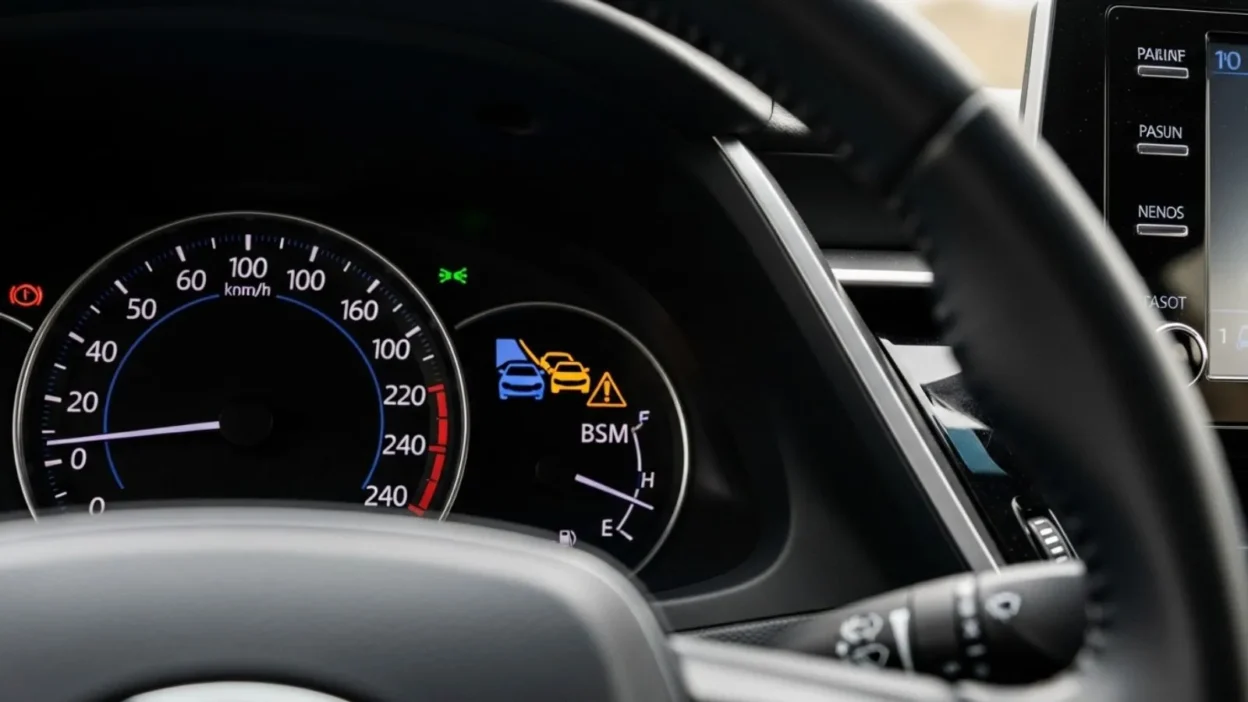
If you’ve recently seen the term BSM in Toyota and wondered what it means, you’re not alone.
The BSM Toyota meaning refers to Blind Spot Monitor, a smart safety feature designed to make driving safer and easier.
It is commonly used in modern Toyota vehicles to help drivers detect cars that are not visible in their side mirrors also known as blind spots. You’ll usually notice this feature through a small warning light on your side mirror or a dashboard alert.
In today’s fast-paced traffic, especially on highways, blind spots can lead to dangerous situations.
That’s where Toyota’s BSM system becomes extremely useful. It constantly monitors nearby lanes and alerts you if another vehicle is too close when you’re about to change lanes.
In this guide, you’ll learn exactly how BSM works, its benefits, limitations, and why it’s an essential safety feature in 2026.
🚗 What Does BSM Mean in Toyota?
The term BSM in Toyota stands for Blind Spot Monitor, an advanced safety feature designed to help drivers stay aware of vehicles that are difficult to see. In simple words, it acts like an extra pair of eyes, watching areas around your car that your mirrors can’t fully cover.
When you’re driving, there are always certain zones—especially on the left and right rear sides of your vehicle—where other cars can hide without being visible in your side or rearview mirrors. These areas are called blind spots, and they are one of the most common causes of lane-change accidents. Toyota introduced the BSM system to reduce this risk and make driving much safer.
The Blind Spot Monitor uses sensors installed on the rear sides of the vehicle to detect nearby cars in adjacent lanes. If a vehicle enters your blind spot, the system immediately alerts you—usually with a small light on your side mirror. If you signal to change lanes while a car is still in that area, the alert may start blinking or produce a warning sound.
Today, BSM is a standard or optional feature in many modern Toyota models. It is part of a broader group of technologies known as driver-assistance systems, which aim to improve road safety and reduce human error. Overall, BSM is a simple yet powerful feature that helps drivers make safer decisions on the road.
⚙️ How Does Toyota BSM Work?
The Blind Spot Monitor (BSM) in Toyota vehicles works using advanced sensors and smart detection technology to keep track of nearby traffic. These sensors are usually installed on the rear corners of the car, allowing the system to monitor areas that are not visible in your mirrors.
When you’re driving, the BSM system continuously scans the lanes next to your vehicle. If another car enters your blind spot—typically from behind or alongside—it immediately detects its presence. Once a vehicle is identified, a small warning light appears on your side mirror, letting you know that it may not be safe to change lanes.
The system becomes even more helpful when you use your turn signal. If you indicate a lane change while a vehicle is still in your blind spot, the warning light will usually start blinking rapidly, and in some models, you may also hear a beeping sound. This dual alert system ensures you don’t accidentally move into an occupied lane.
BSM generally activates at moderate to high speeds, making it especially useful on highways or busy roads. Some Toyota models also include an additional feature called Rear Cross Traffic Alert (RCTA), which works alongside BSM to detect vehicles approaching from the side when reversing.
👀 What Is a Blind Spot in Driving?
A blind spot in driving refers to the areas around your vehicle that cannot be seen through your rearview mirror or side mirrors. Even if your mirrors are properly adjusted, there are still small zones—especially along the sides and slightly behind your car—where other vehicles can remain hidden. These invisible areas are what drivers call blind spots.
Blind spots are most noticeable when another car is traveling right next to you in an adjacent lane. In this situation, the vehicle may disappear from your mirrors, giving you the false impression that the lane is clear. This is exactly when accidents are most likely to happen, especially during lane changes.
For example, imagine you’re driving on a busy highway and decide to switch lanes. You check your mirrors and don’t see any vehicle, so you begin to move over. However, a car that was sitting in your blind spot suddenly appears, forcing you to brake or swerve. These types of situations can be dangerous and stressful.
Common causes of blind spot accidents include:
- Changing lanes too quickly
- Not checking over your shoulder
- Relying only on mirrors
- Driving in heavy traffic
This is why features like Blind Spot Monitor (BSM) are so important. They help detect vehicles in these hidden zones and provide timely alerts, reducing the chances of collisions and improving overall driving safety.
💡 Key Features of Toyota Blind Spot Monitor
The Toyota Blind Spot Monitor (BSM) is more than just a simple alert system—it’s a smart safety feature packed with useful functions that enhance your overall driving experience. Designed to work quietly in the background, BSM provides real-time assistance without distracting the driver.
One of the main features of BSM is real-time vehicle detection. The system constantly scans the adjacent lanes using sensors and instantly detects when another vehicle enters your blind spot. This continuous monitoring ensures that you’re always aware of hidden traffic around your car.
Another important feature is the visual warning indicator. When a vehicle is detected, a small light appears on the corresponding side mirror. This subtle alert grabs your attention without being overwhelming. If you attempt to change lanes while a vehicle is still in your blind spot, the light usually starts blinking, providing a stronger warning.
Many Toyota models also include audible alerts, which produce a beeping sound when there is a higher risk of collision. This is especially helpful in busy traffic situations where quick decisions are required.
Additionally, BSM often works together with Rear Cross Traffic Alert (RCTA). This feature detects vehicles approaching from the side when you are reversing out of a parking space, adding another layer of safety.
🛑 Benefits of BSM in Toyota Cars
The Blind Spot Monitor (BSM) in Toyota cars offers a wide range of benefits that make driving safer, easier, and more convenient. For many drivers, it has become an essential part of modern road safety.
One of the biggest advantages is accident prevention. Blind spots are a leading cause of lane-change collisions, especially on highways or busy roads. With BSM constantly monitoring areas that mirrors can’t cover, drivers are alerted before a potential collision occurs, significantly reducing the risk of accidents.
BSM also improves driver awareness. Even experienced drivers can miss vehicles in their blind spots, particularly in heavy traffic. By providing real-time alerts, the system ensures you stay informed about nearby vehicles, helping you make safer decisions during lane changes.
For beginners or new drivers, BSM is particularly helpful. Learning to check blind spots correctly can take time, and the system acts as a safety net, giving them extra confidence while driving.
Another benefit is stress reduction during driving. Knowing that BSM is actively monitoring surrounding traffic allows drivers to focus more on the road ahead and less on constantly checking mirrors and shoulder angles. This is especially useful on highways and long-distance trips.
Additionally, BSM often works alongside other safety features, such as Rear Cross Traffic Alert and lane departure warning, creating a comprehensive safety network. Together, these technologies make driving not only safer but also more comfortable and less stressful.
⚠️ Limitations of BSM You Should Know
While the Blind Spot Monitor (BSM) in Toyota cars is a highly useful safety feature, it’s important to understand that it is not perfect. Being aware of its limitations ensures drivers use it effectively without over-relying on it.
One limitation is that BSM may not detect very fast-moving vehicles. If a car quickly enters your blind spot, the sensors may take a moment to recognize it, which could reduce reaction time. This is why it’s crucial to combine BSM alerts with proper mirror checks.
Another factor that can affect performance is weather conditions. Heavy rain, fog, snow, or even dust on the sensors can temporarily reduce their accuracy. Toyota recommends keeping sensors clean and free from obstruction to maintain optimal functionality.
Additionally, BSM does not replace driver vigilance. Some drivers mistakenly assume that the system will always prevent accidents. While BSM is a helpful assistant, you still need to check your mirrors and look over your shoulder before changing lanes.
Sensor blockage is another limitation. Mud, ice, or debris covering the sensors can prevent BSM from detecting vehicles. Regular maintenance and cleaning of the sensor area can solve this issue.
Finally, not all Toyota models have advanced features like Rear Cross Traffic Alert or audible warnings, which means some versions may only provide basic visual alerts.
In summary, BSM is an excellent safety tool, but it works best when combined with careful driving habits. Understanding these limitations ensures that drivers use the feature wisely, enhancing safety rather than creating a false sense of security.
🚘 Which Toyota Models Have BSM?
The Blind Spot Monitor (BSM) is becoming a standard or optional feature in many modern Toyota vehicles, especially in mid-range and premium models. Knowing which models include this system can help buyers make informed decisions when choosing a car.
Some of the most popular Toyota models with BSM include:
- Toyota Corolla – Many recent Corolla models, especially the higher trims, come with BSM, offering extra safety for city and highway driving.
- Toyota Camry – The Camry often features BSM as part of Toyota’s Safety Sense package, combining it with lane departure alerts and adaptive cruise control.
- Toyota RAV4 – In this SUV, BSM helps drivers manage blind spots during lane changes, particularly useful in heavy traffic or off-road conditions.
- Toyota Fortuner – For larger vehicles like the Fortuner, BSM improves visibility in tight traffic situations and makes driving safer on highways.
- Toyota Highlander – Many higher trims include BSM, often paired with Rear Cross Traffic Alert, providing extra protection in parking lots and busy streets.
It’s important to note that availability of BSM may vary depending on the year, trim, and region. Some base models may not include it as standard, while mid- and high-level trims often do.
Additionally, Toyota continuously updates its vehicles with new safety technologies, so even if an older model doesn’t have BSM, newer versions usually include it. Before buying, check the specifications of the specific model and trim to ensure BSM is included.
🔔 Understanding BSM Warning Lights in Toyota
The Blind Spot Monitor (BSM) in Toyota vehicles uses visual and sometimes audible alerts to notify drivers about cars in their blind spots. Understanding these warning lights is essential for using the system effectively.
Typically, the BSM warning appears as a small icon on the side mirrors. When the system detects a vehicle in the adjacent lane, the icon lights up, alerting you to a potential hazard. This subtle visual cue is designed to get your attention without being distracting.
If you signal to change lanes while a car is still in your blind spot, the warning light often blinks rapidly. This indicates a higher level of risk and serves as a stronger warning to prevent lane-change collisions. In some Toyota models, a beeping sound may also accompany the flashing light, providing both visual and audio alerts for added safety.
It’s important to note that the color and appearance of the BSM indicator can vary depending on the model. Most commonly, it is amber or yellow, making it noticeable without being overwhelming.
Drivers should also understand that a constant BSM light does not necessarily indicate a malfunction. Instead, it usually means the system is actively monitoring your blind spots. Conversely, if the indicator flashes irregularly or the warning doesn’t work at all, it could signal a sensor issue or blockage. In such cases, inspecting the sensors and cleaning them can restore proper functionality.
By recognizing and responding to BSM warning lights correctly, Toyota drivers can make safer lane changes and reduce the risk of accidents caused by unseen vehicles.
🧠 How to Use BSM Properly While Driving
The Blind Spot Monitor (BSM) in Toyota cars is a powerful tool, but it works best when combined with proper driving habits. Understanding how to use it correctly ensures maximum safety and prevents over-reliance on technology.
First, always remember that BSM is an assistant, not a replacement for driver awareness. While it alerts you to vehicles in your blind spot, you should still check your mirrors and glance over your shoulder before changing lanes. This ensures that you account for motorcycles, bicycles, or smaller objects that the system might miss.
Second, pay attention to the visual and audio alerts. A steady light on the side mirror indicates a vehicle in your blind spot, while a blinking light or sound alerts you to immediate danger when signaling a lane change. Respond promptly to these warnings to avoid accidents.
Third, use BSM primarily on highways and busy roads, where lane changes occur more frequently and blind spots are harder to monitor. While BSM works at lower speeds, its effectiveness is most noticeable in faster-moving traffic.
Fourth, keep the sensors clean and unobstructed. Dirt, ice, or debris can prevent the system from detecting vehicles properly, reducing its reliability. Regular maintenance ensures accurate monitoring.
Finally, integrate BSM with other Toyota safety features like Rear Cross Traffic Alert (RCTA) and lane departure warning. Using these systems together provides a comprehensive safety network, helping drivers stay aware of surrounding traffic and avoid potential collisions.
In summary, proper usage of BSM requires attention, awareness, and routine checks, allowing you to drive with confidence while benefiting fully from Toyota’s advanced safety technology.
🔄 BSM vs Other Safety Features (Comparison)
The Blind Spot Monitor (BSM) is one of several advanced safety technologies available in modern Toyota vehicles. While it focuses on detecting vehicles in blind spots, other systems also aim to make driving safer. Understanding the differences can help drivers use each feature effectively.
BSM vs Parking Sensors: Parking sensors are designed to alert drivers to obstacles when parking or moving at low speeds. They typically provide audio beeps when you approach objects behind or around the vehicle. In contrast, BSM works primarily during lane changes and at higher speeds, monitoring adjacent lanes rather than immediate obstacles.
BSM vs Lane Departure Warning (LDW): Lane departure warning alerts drivers when the car unintentionally drifts out of its lane. LDW focuses on maintaining lane discipline, whereas BSM monitors vehicles in blind spots. Both features complement each other—BSM prevents collisions during lane changes, while LDW helps maintain lane positioning.
BSM vs Rear Cross Traffic Alert (RCTA): RCTA detects vehicles approaching from the side when reversing out of parking spaces. While BSM scans blind spots during forward driving, RCTA is specifically for reversing scenarios. Some Toyota models combine these systems, giving drivers alerts in both forward and backward movements.
BSM vs Adaptive Cruise Control (ACC): Adaptive cruise control maintains a safe distance from vehicles ahead and adjusts speed automatically. Unlike BSM, ACC does not monitor adjacent lanes but ensures longitudinal safety.
In summary, BSM works best when used in combination with other safety features. While each system has a specific purpose, together they create a comprehensive safety network that reduces accidents and enhances driver confidence on the road.
💰 Is BSM in Toyota Worth It?
The Blind Spot Monitor (BSM) in Toyota vehicles is widely regarded as one of the most valuable safety features available today. But is it truly worth the investment? The answer depends on your driving habits, environment, and priorities.
One of the biggest advantages of BSM is accident prevention. Lane-change collisions caused by vehicles hidden in blind spots are common, especially on highways and in heavy traffic. BSM helps alert drivers before a dangerous move, reducing the likelihood of costly accidents and potential injuries. For many, this alone justifies the feature.
BSM also enhances driver confidence. Beginners or drivers unfamiliar with busy highways may find lane changes stressful. With BSM constantly monitoring adjacent lanes and providing real-time alerts, drivers can feel more assured while maneuvering in traffic.
Additionally, BSM adds value to your vehicle. Toyota models equipped with advanced safety systems, including BSM, tend to have better resale value. Buyers often look for cars with modern driver-assistance features, seeing them as safer and more reliable.
However, some drivers may question its necessity in city driving, where traffic is slower and blind spot incidents are less frequent. While BSM is most effective on highways, it still provides an extra layer of awareness even in urban environments.
In conclusion, BSM is worth it for almost every driver, offering safety, confidence, and long-term value. Even if it’s optional on a model, choosing the trim with BSM is a smart decision for anyone prioritizing safety and peace of mind on the road.
🛠️ Can You Turn Off BSM in Toyota?
Yes, the Blind Spot Monitor (BSM) in Toyota vehicles can be turned off, though it’s generally recommended to keep it active for safety. Understanding when and how to disable BSM is useful for drivers who may want temporary control over the system.
Most Toyota models allow you to turn BSM off through the vehicle’s settings menu or via a dedicated button, usually located near the dashboard or steering wheel. When the system is deactivated, the warning lights on the side mirrors will not illuminate, and the audible alerts (if available) will be disabled.
Drivers might choose to turn off BSM in certain situations. For example, if you’re driving off-road, in heavy snow, or on muddy roads, the sensors may produce false alerts due to debris or environmental interference. Disabling the system temporarily can prevent unnecessary distractions.
It’s important to note that turning off BSM should be done carefully and selectively. The system is designed to provide an extra layer of awareness that can prevent accidents, especially on highways and busy streets. Relying solely on your mirrors without BSM increases the risk of missing vehicles in blind spots.
Once the conditions causing false alerts are resolved, you should reactivate BSM immediately. Doing so ensures that you continue to benefit from this important safety feature.
In summary, while Toyota allows BSM to be turned off for specific situations, it is strongly recommended to keep it on during regular driving. Proper use enhances safety and provides peace of mind for every driver.
❓ FAQs About BSM Toyota Meaning
1. What does BSM mean in Toyota cars?
BSM stands for Blind Spot Monitor, a system that alerts drivers when another vehicle enters their blind spot, helping prevent collisions during lane changes.
2. Is BSM always accurate?
BSM is highly reliable but not foolproof. Fast-moving vehicles, motorcycles, or environmental factors like heavy rain or snow can reduce its effectiveness. Always check mirrors and glance over your shoulder.
3. Does BSM work at low speeds?
BSM primarily activates at moderate to high speeds, such as highway driving. While it can detect vehicles at lower speeds, its alerts are most effective on busy roads or during lane changes.
4. Can BSM detect motorcycles?
Yes, in many cases BSM can detect motorcycles. However, smaller vehicles may occasionally go unnoticed, so drivers should remain vigilant.
5. What is the difference between BSM and blind spot mirrors?
Blind spot mirrors are small convex mirrors that expand your view. BSM uses sensors and alerts to actively warn about vehicles in blind spots, offering a higher level of safety.
6. Can I turn off BSM in Toyota?
Yes, the system can be temporarily turned off via the vehicle’s settings menu or a dedicated button, but it is recommended to keep it on for daily driving.
7. Which Toyota models have BSM?
Popular models like the Corolla, Camry, RAV4, Fortuner, and Highlander
often include BSM, usually as part of higher trims or safety packages.
🧾 Conclusion
The Blind Spot Monitor (BSM) in Toyota vehicles is a smart and practical safety feature designed to protect drivers from unseen hazards.
By constantly monitoring areas that are difficult to see with mirrors alone, BSM provides visual and audible alerts that help prevent lane-change collisions.
While it is not a replacement for careful driving, it acts as an essential assistant, particularly on highways and in heavy traffic.
Toyota’s BSM system is available in many popular models, including the Corolla, Camry, RAV4, Fortuner, and Highlander, and often works alongside other safety technologies like Rear Cross Traffic Alert and Lane Departure Warning.
Understanding how BSM functions, its benefits, and limitations allows drivers to use it effectively.

Oliver Wordsmith is the creative mind behind Punnery.com, a website full of clever puns, witty wordplay, and visual jokes. At Punnery.com, Oliver shares content that makes readers laugh, sparks creativity, and celebrates the playful side of language.